
Nuclear Medicine at Medicover Cancer Institute, Chintareddy Palem, Nellore
Explore Nuclear Medicine services, treatments, diagnostic care and related doctors at Medicover Cancer Institute.
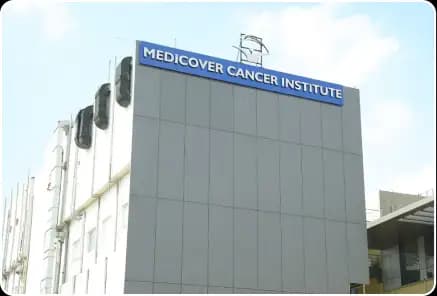
Medicover Cancer Institute – Best in Chintareddy Palem, Nellore
- Beds
- 200
Nuclear Medicine at Medicover Cancer Institute
Nuclear Medicine at Medicover Cancer Institute in Nellore focuses on using small amounts of radioactive tracers to evaluate how organs and tissues function and, in selected situations, to support targeted treatment. Nuclear medicine can provide information that complements conventional imaging by showing functional or metabolic activity within the body. For cancer patients, nuclear imaging may be used during diagnosis, staging, treatment planning or response assessment, depending on the cancer and the clinical question. This page helps patients searching for Nuclear Medicine in Nellore understand the specialty, common diagnostic approaches, PET-CT, specialist consultations, treatment-related applications and what to expect during evaluation at Medicover Cancer Institute, Chintareddy Palem.
Nuclear Medicine at Medicover Cancer Institute, Nellore
Nuclear Medicine is a medical specialty that uses radiopharmaceuticals—medicines containing small amounts of radioactive material—to examine biological processes inside the body. Unlike many conventional imaging tests that primarily show anatomy, nuclear medicine can provide information about how tissues and organs are functioning.
At a cancer-focused hospital such as Medicover Cancer Institute in Nellore, nuclear medicine can be particularly relevant to the evaluation and management of cancer. Depending on the patient's diagnosis and the clinical question, nuclear medicine imaging may help identify areas of abnormal metabolic activity, determine the extent of disease, assist with treatment planning and monitor how a disease responds to therapy.
Patients searching for a Nuclear Medicine hospital in Nellore, a PET-CT evaluation, nuclear imaging or specialist consultation may be referred for a specific examination based on their symptoms, previous investigations and treatment history.
Nuclear medicine does not replace every other form of imaging. CT, MRI, ultrasound, laboratory tests, biopsy and other investigations may also be needed. The appropriate combination depends on the suspected or confirmed condition.
Nuclear Medicine Services and Areas of Care
Nuclear Medicine covers both diagnostic imaging and selected therapeutic applications. The exact examination is chosen according to the patient's medical condition and the information required by the treating team.
PET and PET-CT Imaging
PET, or Positron Emission Tomography, provides information about metabolic activity in tissues. PET-CT combines this functional information with detailed anatomical images from CT.
In oncology, PET-CT may be considered for purposes such as:
- Evaluating a suspected or known cancer
- Determining the extent or stage of selected cancers
- Identifying areas that may require further investigation
- Supporting treatment planning
- Assessing response to treatment
- Investigating suspected recurrence when clinically appropriate
The tracer used for a PET examination depends on the clinical purpose. FDG-PET is commonly used for many cancers, while other tracers may be appropriate for particular diseases.
SPECT Imaging
Single Photon Emission Computed Tomography, or SPECT, is another nuclear medicine imaging technique. It can provide three-dimensional information about the distribution of a radiotracer within the body.
Depending on the clinical indication, SPECT may be used to assess organs, bones, blood flow or other physiological processes.
Bone Scans
A nuclear medicine bone scan can help evaluate changes in bone metabolism. It may be considered when a doctor needs additional information about certain bone abnormalities, unexplained bone pain or possible spread of selected cancers to the skeleton.
A bone scan is not a diagnosis by itself. Results are interpreted alongside symptoms, medical history and other investigations.
Organ Function Assessment
Nuclear medicine can also be used to assess the function of certain organs. Depending on the tracer and examination, nuclear imaging may provide information about areas such as the kidneys, thyroid, heart or other tissues.
Conditions Evaluated Through Nuclear Medicine
Nuclear medicine is used across several areas of medicine, although its role depends on the patient's individual clinical situation.
Cancer and Tumour Evaluation
Cancer is one of the major areas in which nuclear medicine can contribute to diagnosis and treatment planning.
PET-CT and other nuclear imaging techniques may help doctors evaluate selected cancers, understand disease distribution and monitor changes during or after treatment.
Nuclear imaging may be relevant to cancers involving areas such as:
- Lung
- Breast
- Head and neck
- Lymphatic system
- Colorectal region
- Prostate
- Certain gastrointestinal organs
- Other cancers where an appropriate nuclear medicine tracer is available
Not every cancer requires PET-CT or nuclear imaging. The decision depends on cancer type, stage, symptoms, previous test results and the purpose of the examination.
Thyroid Disorders
Nuclear medicine has an established role in evaluating thyroid function and selected thyroid conditions. Thyroid scans and radioactive iodine-based procedures may be considered in appropriate patients.
For thyroid-related care, the nuclear medicine specialist may work alongside endocrinologists, surgeons or other treating specialists.
Bone and Skeletal Evaluation
Nuclear medicine bone imaging can identify areas of altered bone activity. It may be useful in selected cases involving unexplained bone symptoms, certain bone disorders or cancer evaluation.
Heart and Circulation
Some nuclear medicine examinations are designed to assess blood flow and cardiac function. Nuclear cardiac imaging may be considered in selected patients when functional information about the heart is clinically required.
Kidney and Urinary Tract Evaluation
Certain nuclear medicine studies can assess renal function, drainage and the relative contribution of each kidney. Such tests are different from routine blood or urine tests because they provide functional imaging information.
Nuclear Medicine Treatments and Procedures
Nuclear Medicine is not limited to diagnostic scans. Certain radiopharmaceuticals can also be used therapeutically because they deliver radiation selectively to specific tissues or disease targets.
Potential nuclear medicine treatment applications include selected thyroid disorders and certain cancers or other conditions for which a suitable radiopharmaceutical therapy is clinically indicated.
Radioiodine Therapy
Radioactive iodine is used in selected thyroid conditions because thyroid tissue naturally takes up iodine.
Depending on the diagnosis, radioiodine may be used as part of treatment for certain thyroid disorders or differentiated thyroid cancers.
The treatment requires careful patient selection, appropriate preparation and radiation-safety instructions.
Targeted Radiopharmaceutical Therapy
Some cancers have biological characteristics that allow a radioactive substance to target particular cells. These treatments are sometimes called targeted radionuclide or radiopharmaceutical therapies.
Examples may include therapies directed at specific molecular targets in selected cancers. Eligibility depends on the cancer type, disease characteristics, imaging findings, previous treatment and overall health.
Patients should discuss the expected benefits, possible side effects, radiation-safety precautions and alternatives with their treating specialist before proceeding.
Nuclear Medicine Diagnostic and Evaluation Services
A nuclear medicine investigation generally begins with a clinical question. The doctor determines whether nuclear imaging is appropriate and selects the most suitable examination and tracer.
Depending on the study, evaluation may include:
- PET or PET-CT imaging
- SPECT imaging
- Bone scintigraphy
- Thyroid imaging
- Renal functional imaging
- Cardiac nuclear imaging
- Other organ-specific nuclear medicine studies
- Follow-up imaging for selected conditions
- Functional assessment alongside anatomical imaging
PET-CT and Cancer Evaluation
PET-CT can be especially useful when doctors need both metabolic and anatomical information. In cancer care, the scan may help determine whether an area is metabolically active and where it is located anatomically.
However, increased tracer uptake does not automatically mean cancer. Infection, inflammation and other processes can sometimes produce abnormal findings. Results therefore need to be interpreted in the context of the patient's medical history and other investigations.
When Should You See a Nuclear Medicine Specialist?
Nuclear medicine examinations are generally recommended by a doctor when functional or metabolic information could help answer a specific clinical question.
You may be referred for nuclear medicine evaluation when:
- A cancer has been diagnosed and further staging information is needed
- A doctor needs to assess treatment response
- Cancer recurrence is suspected
- A specific tumour type may benefit from a specialised nuclear medicine tracer
- A thyroid disorder requires functional imaging or radioiodine-related evaluation
- Bone metabolism needs further assessment
- Kidney function needs a specialised functional study
- Cardiac blood flow or function requires nuclear imaging
- Another diagnostic test has produced findings that require additional evaluation
A patient should not assume that a PET scan or other nuclear medicine test is necessary simply because cancer is suspected. The treating doctor will consider the diagnosis, symptoms, previous tests and clinical purpose before recommending an examination.
What to Expect During a Nuclear Medicine Consultation
A nuclear medicine consultation or evaluation usually begins with a review of your medical history and the reason for referral.
1. Medical History Review
The specialist may review your diagnosis, symptoms, previous scans, biopsy reports, laboratory results and current medications.
For cancer patients, previous treatment such as surgery, chemotherapy, immunotherapy or radiation therapy may also be relevant.
2. Preparation for the Examination
Preparation varies significantly between nuclear medicine tests.
For some PET examinations, dietary restrictions or fasting may be required. Blood glucose may also need to be checked before certain scans.
Other examinations have different preparation requirements. Patients should follow the instructions provided by the nuclear medicine team rather than relying on general information from the internet.
3. Radiotracer Administration
The selected radiotracer may be administered through an injection, orally or by another appropriate route depending on the examination.
A waiting period may be required to allow the tracer to distribute through the body.
4. Imaging
The patient is positioned for imaging while the scanner records the distribution of the tracer.
The process may take different amounts of time depending on the type of examination.
5. Interpretation and Reporting
A nuclear medicine specialist interprets the images and prepares a report. The findings are considered together with the patient's medical history and other test results.
The report can then help the treating physician decide whether further testing, treatment or follow-up is required.
Why Choose Nuclear Medicine Care at Medicover Cancer Institute?
Patients comparing nuclear medicine services in Nellore should look beyond the name of a scan and consider whether the service is appropriate for their clinical needs.
Important factors include access to qualified nuclear medicine specialists, appropriate imaging technology, reliable reporting, radiation-safety protocols and coordination with the patient's broader treatment team.
For cancer patients, coordination between nuclear medicine, medical oncology, surgical oncology and radiation oncology can be particularly important because imaging findings may influence staging, treatment planning or follow-up.
Medicover Cancer Institute in Chintareddy Palem is specifically relevant to patients looking for cancer-focused medical services in Nellore. Patients should confirm the availability of a particular scan, tracer or nuclear medicine therapy before scheduling an appointment, as services can vary according to clinical indication and facility availability.
Nuclear Medicine Doctors and Specialists
A nuclear medicine specialist is a doctor trained to interpret nuclear imaging studies and manage appropriate radiopharmaceutical-based diagnostic or therapeutic applications.
The specialist's role may involve:
- Selecting the appropriate nuclear medicine examination
- Reviewing the patient's clinical history
- Determining whether a scan is suitable
- Advising on examination preparation
- Interpreting nuclear medicine images
- Providing diagnostic reports
- Assessing eligibility for selected radiopharmaceutical therapies
- Coordinating with oncologists and other specialists
- Advising on follow-up when required
For patients searching for Nuclear Medicine doctors in Nellore, it is useful to check the specialist's qualifications, area of practice and experience with the particular examination or treatment being considered.
Doctor availability and consultation schedules can change, so patients should confirm current details before visiting.
Nuclear Medicine Care in Nellore
For people searching for Nuclear Medicine in Nellore, local access can make it easier to coordinate diagnostic imaging and follow-up with the wider healthcare team.
Medicover Cancer Institute is located in Chintareddy Palem, Nellore, making this page relevant to patients specifically looking for cancer-related nuclear medicine services in the locality.
When arranging an appointment, patients should consider practical details such as:
- Whether a referral is required
- The exact scan or procedure recommended
- Preparation instructions
- Expected appointment duration
- Previous reports that should be carried
- Whether fasting or medication adjustments are required
- Whether a family member or attendant is recommended
- Post-procedure or radiation-safety instructions, if applicable
Patients travelling from other parts of Nellore or nearby areas may also want to confirm the hospital location, appointment timing and availability of the required nuclear medicine service in advance.
How to Choose the Right Nuclear Medicine Hospital or Specialist
Choosing a nuclear medicine provider should begin with the clinical reason for the examination rather than simply searching for the nearest scan centre.
Consider the following:
Specialist Qualifications
Check whether the service is supervised by appropriately qualified nuclear medicine professionals and whether their experience matches the type of examination or therapy required.
Appropriate Diagnostic Capability
Different nuclear medicine studies answer different clinical questions. Ask whether the facility provides the specific examination recommended by your doctor.
Coordination With Other Specialists
For cancer care, nuclear medicine findings may need to be reviewed alongside pathology, CT or MRI results and the opinions of medical, surgical or radiation oncologists.
Radiation Safety
Nuclear medicine uses radioactive materials under controlled medical conditions. Appropriate handling, administration and radiation-safety procedures are important parts of responsible care.
Clear Patient Communication
Patients should receive understandable instructions about preparation, the procedure, possible precautions and when results will be available.
Follow-Up Planning
The scan itself is only one part of the diagnostic process. Ask how the results will be communicated and which treating specialist will use them to guide further care.
Frequently Asked Questions About Nuclear Medicine
What does a Nuclear Medicine specialist do?
A Nuclear Medicine specialist uses radiopharmaceuticals for diagnostic imaging and, in selected situations, treatment. The specialist interprets nuclear imaging studies and may coordinate with other doctors involved in the patient's care.
Is Nuclear Medicine only used for cancer?
No. Nuclear medicine is used in several areas, including cancer evaluation, thyroid disorders, bone assessment, cardiac imaging and kidney-function studies. The examination depends on the patient's medical condition.
What is a PET-CT scan?
PET-CT combines Positron Emission Tomography with computed tomography. PET provides information about tracer uptake and metabolic activity, while CT provides anatomical detail. The combined information can be useful in selected cancer evaluations and other clinical situations.
Does every cancer patient need a PET-CT?
No. PET-CT is not necessary for every cancer or every stage of disease. The decision depends on the cancer type, clinical situation, previous investigations and the specific information the treating team needs.
Is a nuclear medicine scan safe?
Nuclear medicine examinations use controlled amounts of radioactive material. The level of exposure varies by examination. The nuclear medicine team considers the clinical benefit and follows appropriate radiation-safety practices.
Pregnancy and breastfeeding can affect whether some nuclear medicine examinations are appropriate, so patients should inform the medical team about these circumstances before the test.
How should I prepare for a nuclear medicine scan?
Preparation depends on the examination. Some tests may require fasting, dietary restrictions or other specific instructions, while others may not. Always follow the instructions provided for your particular scan.
What should I bring to a Nuclear Medicine consultation?
Bring previous scan reports, biopsy or pathology reports, relevant blood-test results, prescriptions or medication details, and information about previous cancer treatments if applicable. These records can help the specialist understand the clinical context.
How do I choose a Nuclear Medicine hospital in Nellore?
Consider specialist qualifications, availability of the required scan or therapy, diagnostic and reporting processes, radiation-safety practices, coordination with other specialists and convenience of location. Confirm the exact service before booking.
Can Nuclear Medicine be used as a treatment?
Yes. Selected radiopharmaceuticals can be used therapeutically for certain thyroid conditions and cancers or other diseases with suitable biological targets. Treatment eligibility depends on the individual diagnosis and specialist assessment.
How can I book a Nuclear Medicine consultation at Medicover Cancer Institute?
Patients can use the available hospital or healthcare booking channel to request a consultation. Before booking, confirm the required examination or consultation type, preparation instructions and current availability of the Nuclear Medicine service.
Medical treatment and diagnostic decisions should always be based on an individual assessment by a qualified healthcare professional. Treatment depends on the underlying condition, diagnosis and individual health needs.
Nuclear Medicine Treatments
I-131 Radioiodine Therapy
Advanced treatment available at Medicover Cancer Institute.
Lu-177 Psma Therapy
Advanced treatment available at Medicover Cancer Institute.
Lu-177 Dotatate Prrt
Advanced treatment available at Medicover Cancer Institute.
Lu-177 Dotanoc Therapy
Advanced treatment available at Medicover Cancer Institute.
Y-90 Radioembolization (tare/sirt)
Advanced treatment available at Medicover Cancer Institute.
Frequently Asked Questions About Nuclear Medicine
What types of nuclear medicine procedures are performed at Medicover Cancer Institute?
We perform a wide range of nuclear medicine procedures, from routine diagnostics to complex surgeries, using the latest medical technologies.
How can I book an appointment for Nuclear Medicine at Medicover Cancer Institute?
You can book an appointment through the Siris Healthcare platform by clicking the "Get Free Estimate" button or contacting our 24/7 helpline.
Other Medical Specialties at Medicover Cancer Institute Chintareddy Palem
Get Expert Nuclear Medicine Care at Medicover Cancer Institute, Chintareddy Palem
Schedule a consultation with our top specialists and get a personalized treatment plan with a free cost estimate.
Top Specialities at Medicover Cancer Institute Chintareddy Palem
- Oncology Department
- Thoracic Surgical Oncology Department
- Oncoplastic Surgery Department
- Bone Marrow Transplant Department
- Nuclear Medicine Department
- Physiotherapy Department
- Medical Oncology Department
- Radiation Oncology Department
- Breast Oncology Department
- Thoracic Oncology Department
- Pediatric Oncology Department
- Physiotherapy & Rehabilitation Department
- Palliative Care Department
- Surgical Oncology Department
Best Hospitals in Nellore
Medical Services in India
Topics related to Medicover Cancer Institute
Cancer Diagnosis in Nellore: When Are CT, MRI, PET-CT and Other Tests Used?
Finding out that a scan, blood test or examination has raised a concern about ca...
How Is Cancer Treatment Planned When Several Oncology Specialists Are Involved
A cancer diagnosis rarely leads to just one treatment decision. Depending on the...
Cancer Treatment Follow-Up: Which Tests and Appointments May Be Needed After Treatment?
Finishing cancer treatment can feel like reaching an important milestone, but me...
Preparing for Cancer Surgery: What Tests, Reports and Questions Should Patients Bring?
Being told that surgery may be part of your cancer treatment can raise practical...
Palliative Care During Cancer Treatment: How Can It Help With Pain and Other Symptoms?
Cancer treatment is often focused on controlling or treating the cancer itself. ...
Cancer Rehabilitation After Treatment: How Can Physiotherapy Support Recovery?
Completing cancer treatment can be an important milestone, but recovery does not...
Breast Cancer Treatment Options: How Do Surgery, Medicines and Radiation Fit Together?
A breast cancer diagnosis can lead to an immediate question: What treatment will...
Blood Cancer Diagnosis and Treatment: What Tests and Specialists Are Involved?
Being told that you may have a blood cancer can raise many questions at once: Wh...
CAR T-Cell Therapy for Blood Cancer: Who May Be Eligible and How Does Treatment Work?
A diagnosis of blood cancer can lead to difficult treatment decisions, particula...
Pediatric Cancer Treatment: When Should a Child See a Pediatric Oncologist?
When a child develops a persistent or unusual health problem, parents naturally ...